scientific culture
Welcome to the Ding Lab!
We believe that great science begins with curiosity, creativity, and rigorous thinking, and thrives on perseverance and collaboration. We strive to build an inclusive, supportive, and collaborative environment where trainees can grow into ambitious, confident, and independent scientists. We especially welcome students from diverse backgrounds and across disciplines. We all have something valuable to contribute, teach, and learn from one another.
Being a scientist is both a privilege and a responsibility. Two principles guide our scientific philosophy: 1) “Don’t do fashionable science”: pursue important questions, not merely popular trends; and 2) “Accept nothing on authority”: question assumptions, challenge dogma, and let evidence guide our conclusions. We value carefully designed experiments, testable hypotheses, and rigorous, interpretable results, regardless of whether they support the initial expectations. After all, some of the most exciting discoveries begin with unexpected findings!
If you share our curiosity and passion for discovery, we’d love to hear from you!
People behind the science
Principal Investigator: Xiaoyun Ding, PhD
Born and raised in northeastern China, I spent countless hours watching ants and marveling at the beautiful mountains and rivers as a child. I dreamed of becoming a zookeeper, as I simply didn’t know becoming a scientist was a possibility! I entered Shanghai Jiao Tong University to study Economics, but an unexpected opportunity to join a special undergraduate program in basic research opened up an entirely new world for me. I fell in love with the often-overlooked glial cells and never looked back.
I went on to earn my PhD in Developmental Biology at Baylor College of Medicine, focusing on oligodendrocyte development and myelin repair. I then pursued postdoctoral training with Dr. Matthew Rasband, where I continued exploring the intricate molecular interactions between myelinating oligodendrocytes and axons using advanced molecular tools.
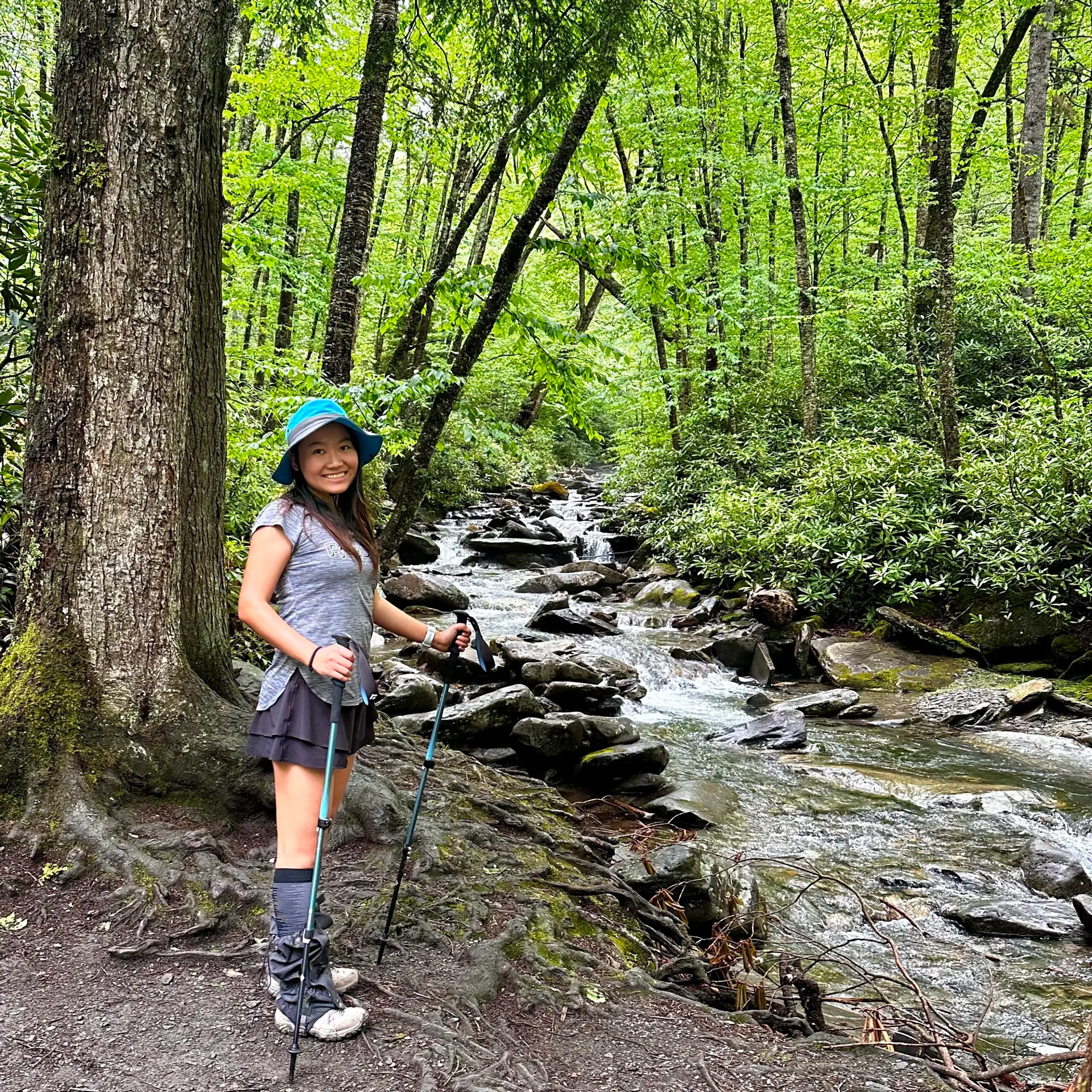
Outside the lab, I’m an avid runner, an adventurous cook, and a tennis enthusiast. I love losing myself in the mountains whenever I get the chance. I’m also a proud cat mom to Sneaky and Jamie, who remind me that not everything in life needs a scientific explanation.
Join us
Join a new lab, from the ground up.
The Ding Lab will open on July 1st, 2027 in the Department of Neuroscience at the Medical University of South Carolina. We are recruiting at all levels!
Lab manager
Whether you have experience managing a lab or are a recent graduate, we welcome applicants with a long-term interest in helping build and organize an academic research laboratory. We offer competitive compensation, a collaborative and supportive lab culture, a healthy work environment, and opportunities for intellectual contribution and professional growth. You will coordinate day-to-day lab operations, oversee purchasing and reagent inventories, manage mouse colonies, and contribute to ongoing research projects. As an early member of the team, you will help shape the lab’s organization, culture, and scientific direction.
Applicants with or without a PhD are welcome to apply. Please email Xiaoyun with your CV, a brief description of any research or work experience, why you’re interested, and contact information for two references.
Technician / Research specialist
We welcome motivated and curious individuals interested in gaining hands-on experience in molecular and cellular neuroscience. You will contribute to ongoing research projects using a broad range of approaches, including molecular biology, biochemistry, genetics, imaging, and behavioral experiments. Depending on your interests and experience, you will have opportunities to learn new techniques, participate in experimental design and data analysis, and gradually develop independent research projects.
We are committed to providing a supportive training environment that encourages scientific curiosity, critical thinking, and professional growth. Whether you are preparing for graduate or medical school, exploring a career in biomedical research, or seeking a long-term research position, we hope to help you develop the skills and experience needed to achieve your goals.
Applicants with a Bachelor’s degree are welcome to apply. Please email Xiaoyun with your CV, a brief description of any research experience and your career goals, and contact information for two references.
Undergraduate research assistant
We are committed to providing excellent research opportunities for enthusiastic undergraduate students across relevant majors, especially those interested in pursuing graduate training in biomedical sciences (PhD or master’s), medicine (MD), or a career as a physician-scientist (MD/PhD). You will have opportunities to gain hands-on research experience, develop scientific thinking and technical skills, and work closely with lab members on active projects.
Please email Xiaoyun with your CV, a brief description of your research interests, why you would like to join our lab, your anticipated time commitment, and how we can best support your academic and career goals.
Graduate student
Graduate students join the lab through the relevant MUSC graduate programs. Whether you are interested in basic research in glial biology, neurodevelopment and aging, translational research in CNS injury, neurological or psychiatric disorders, or novel tool development with the potential to impact the field, please reach out to discuss a potential rotation in the lab. We will work together to develop rotation projects that are tailored to your specific interests. You will have the opportunity to learn fundamental molecular experimental techniques, experience the day-to-day environment and culture of the lab, explore potential dissertation directions, and determine whether the environment, mentorship, and research directions are the right fit for your scientific and career goals. During your PhD, you will also develop critical skills in leadership and science communication, receive tailored mentorship and guidance on fellowship applications, and have numerous opportunities to attend conferences or workshops and present your work.
Students from all backgrounds are strongly encouraged to apply. You do not need to already be a molecular neuroscientist! That’s the goal of your PhD training.
Postdoctoral fellow
We are seeking creative, ambitious, and highly motivated postdoctoral researchers who are excited to explore new directions and develop innovative tools to address fundamental questions. We welcome applicants from diverse scientific backgrounds, including but not limited to neuroscience, molecular and cellular biology, developmental biology, genetics, biochemistry, bioengineering, or computational biology.
Postdoctoral fellows will lead independent research projects, explore their own scientific ideas, establish collaborations, and gain experience mentoring junior trainees. You will also be provided close guidance on career development, such as support and mentorship on fellowship and grant applications, conference presentations, leadership and mentorship training programs, etc. Together, we will develop ambitious yet feasible research goals tailored to your scientific interests and long-term career aspirations.
Interested candidates should email Xiaoyun with their CV, a brief summary of previous and current research, specific research interests in our lab, and contact information for three references.
Ding Lab · Axon–Glia Interactions